
Efficient WoW Forever leveling starts with a route that fits your goals. A speedrun benefits from tightly grouped quests, planned travel, and selective dungeon visits. An exploration run needs room for unfamiliar quest chains and discoveries. Both approaches benefit from preparing your bags, managing your gold, and checking progression systems before leaving a zone.
Treat each play session as a connected route. Collect nearby objectives, decide whether a dungeon fits your schedule, and return to town when you have several useful things to do there. Small improvements to travel and preparation add up across the journey to level 60.
Choose Between Speedruns, Exploration, and a Mixed Route
For a speedrun, build your route around consistent progress. Favor clusters of quests that share enemies or locations, and combine their turn-ins into one return trip. Before crossing a zone, check whether you also need a flight path, a class trainer, or supplies along the way.
Judge a quest by its full time cost. A generous reward loses some appeal when it requires a long detour, scarce enemies, and another trip back to town. When an objective becomes heavily contested, consider moving to another quest hub and returning later.
A mixed route works well if you want efficient leveling while experiencing unfamiliar content. Keep a dependable questing route as your foundation, then reserve time for new quest chains and first dungeon clears. Route guidance is most useful when you need a clear next destination; leave yourself room to follow something interesting.
For an exploration-focused character, set a smaller goal for each session: finish a quest storyline, investigate an unexplored corner, or visit a dungeon you have never completed. This gives your journey direction without turning every decision into an experience-per-hour calculation.
Discover New Content Without Creating Extra Return Trips
Build exploration into the route you already intend to travel. Before leaving a quest hub, look for unfinished chains, nearby map gaps, and dungeon prerequisites. Record discoveries that require a higher level so you can return with a purpose.
Ask innkeepers about available dungeons when planning your next group activity. Their dungeon information received an update on November 10, 2026, making them a useful in-game starting point for deciding where to explore next.
Library books also deserve a place in your collection routine. The November 13 fixes restored book turn-ins at the relevant NPCs in Stormwind and Undercity. If you collect books while traveling, include a hand-in stop when your route next passes through the city.
Avoid interrupting an entire questing session for one distant collectible. Mark its location, check your remaining bag space, and combine the trip with another objective.
Plan Dungeon Runs Around Quests, Gear, and Completion
A productive dungeon visit begins before the entrance. Check prerequisites, collect the available quests, repair your equipment, and agree on the group’s intended pace. Tell the group if you need optional bosses or objectives so everyone understands the route.
For your first clear, evaluate the whole reward package: quest completion, useful drops, progression credit, and the time spent forming and traveling. Repeat runs need a clear purpose. A targeted equipment upgrade or a reliable group can justify another visit, while an uncertain drop with a long setup time deserves a closer look.
Match the party’s levels to the dungeon. The November 13, 2026 hotfix states that dungeon enemies award zero kill experience to the entire party when those enemies are trivial to at least one member. Bringing an overleveled character can therefore undermine an experience-focused run.
Dungeon speedruns also need to account for entry limits. Since November 20, players can reset and enter each dungeon a maximum of five times per hour. Plan repeated clears around that restriction, and keep a questing alternative ready if your group reaches it.
When choosing a group, consider its purpose alongside its composition. A relaxed quest clear and a fast farming run demand different preparation. Agree on loot expectations before starting, especially if you intend to collect equipment for a second role.
Unlock Legacy Points Early
Legacy Points support account progression through challenges, character-specific perks, and cosmetic rewards. You unlock the system when you earn your first point. Reaching level 25 is a common starting point, but reaching skill 150 in a non-gathering primary profession or exploring the entire world map can also unlock it. The default shortcut is Y.
Each character allocates points independently. Spending points on your main leaves your other characters’ allocations available, allowing you to build one character for adventuring and another for crafting. At launch, each character can spend up to 16 points.
Review the system as soon as it becomes available. Read the costs, ranks, and prerequisites before selecting a path, then choose benefits that support the activities you actually repeat.
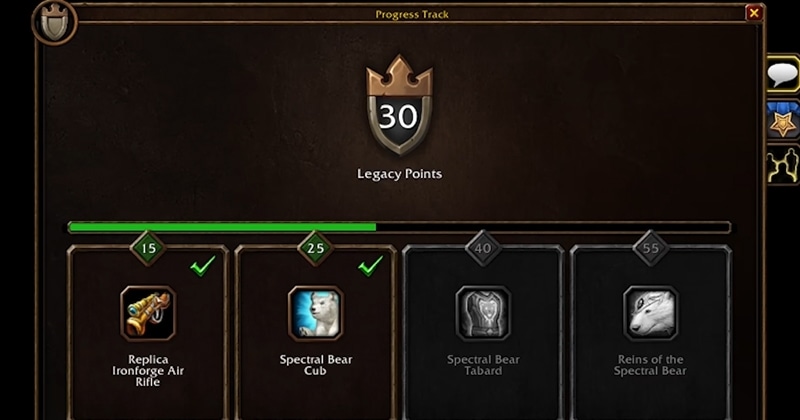
Earn Legacy Points Through Your Leveling Route
Use the Legacy challenge panel to identify milestones close to your existing goals. Class levels, crafting progress, dungeon completion, exploration, and PvP provide different routes toward account progression.
Two distinctions help prevent wasted effort. Profession challenges specify non-gathering primary professions, so gathering skill alone does not meet that requirement. The exploration challenge requires the entire world map on one character; finishing an individual zone contributes toward that goal.
Dungeon challenges are organized into level brackets. Check which completions you still need before choosing your next run, and combine that visit with quests or equipment goals whenever practical.
Plan around nearby milestones rather than forcing every activity into one character’s schedule. If you already want another class or a different crafting profession, use its progression to broaden your account’s challenge completion.
Choose Legacy Perks for Speed, Alts, or Professions
Read each perk against your play pattern. A benefit you trigger throughout every session generally deserves more attention than one tied to an activity you rarely do.
| Playstyle | Perks to examine | Relevant benefit |
|---|---|---|
| Frequent solo combat | Thrill of Adventure | Health and mana recovery after non-trivial kills |
| Rotating between alts | Well Rested | Faster rested experience accumulation and a higher cap |
| Earlier talent access | Talented | Talent points available up to five levels earlier |
| Frequent zone travel | Frequent Flier | Cheaper and faster flights |
| Crafting progression | Working Overtime | Increased tradeskill skill-up chance |
| Longer preparation buffs | Gourmand and Permanence | Longer food or other supported buff durations |
These effects span the Adventure, Professions, and Resourcefulness trees. Check the full in-game requirements before committing to a route through them.
For an actively played leveling character, compare recovery and travel benefits with earlier talent access. For an alt that spends substantial time resting, inspect Well Rested early. Give a dedicated crafter its own allocation based on production and skill progression.
Talented advances talent access by up to five levels. Use its tooltip and your class talent tree to identify the exact breakpoint you want to reach.
Use Camping as Part of Your Preparation
Camping creates a shared rest stop through Cooking and profession-made features. A Basic Campfire supports up to three contributed objects, with each player adding one. Sitting or crafting nearby for at least one minute grants the available feature benefits.
Put that minute to work. Sort your bags, discuss the next quest area, assign dungeon roles, or check supplies while the group prepares. Camping fits naturally before a dungeon or a longer stretch of outdoor questing.
Inspect the benefits already active on your character. Some camp effects are exclusive with corresponding class buffs. The Fishing Bowl’s 8% stat benefit, for example, is exclusive with Blessing of Kings. Choose features that fill gaps in your group’s preparation.
Advanced camping also creates reasons to revisit dungeons and develop professions. More advanced campsite objects use Blueprint recipes from specific dungeon bosses, while upgraded campfires support additional features. Check whether an intended dungeon visit also offers a useful camping recipe.
Manage Gold Around Your Next Meaningful Upgrade
Give your gold a purpose before spending it. Separate essential training and travel costs from optional equipment purchases, then judge each purchase by how much it improves your current route.
Review skill training individually. Prioritize abilities you use for damage, survival, control, and your intended group role. Delay purchases with little immediate value, while keeping enough flexibility to handle difficult quests or join a planned dungeon.
Compare equipment by practical results. Ask whether an item reduces the number of attacks or casts needed to defeat your usual enemies, improves survival, or shortens recovery. A cheap upgrade that fixes a weak slot can be more useful than an expensive item you will replace soon.
If a search for buy WoW Forever Gold begins with frustration over an upgrade price, calculate the actual shortfall before changing your budget. Check your stored materials, upcoming quest rewards, and less expensive equipment options. Keep mount and training savings visible so an impulse purchase does not disrupt your next milestone.
Treat material speculation cautiously. Base a purchase on existing recipes and your own profession plans. Avoid tying up essential leveling funds in items whose value depends on an unannounced profession or future update.
Prepare Alts With a Clear Role and Route
Decide what an alt adds to your account before making a large investment. A different class, a complementary profession, or a new questing route gives the character a clear purpose.
Prepare a small starting package: useful bags, appropriate consumables, and a limited training allowance. Reassess equipment at meaningful level milestones rather than buying replacements constantly.
Choose Legacy perks separately for each alt. The system supports independent allocations, and ordinary non-Hardcore characters share earned account points. Hardcore has separate progression rules, so account planning needs to respect the selected ruleset.
Rotate characters when the change keeps the game enjoyable. If you choose Well Rested, let it support that schedule. Avoid turning every logout and login into a mandatory efficiency exercise.
Build a Repeatable Leveling Session
Start each session with one concrete objective: finish a quest cluster, complete a dungeon with its prerequisites ready, reach a profession milestone, or investigate a new area.
Before leaving town, clear space, check equipment, replenish supplies, and choose a sensible return point. During the route, group nearby tasks and mark discoveries that require a later visit. Before logging out, review your next destination and any Legacy challenge close to completion.
For speedruns, track the delays that actually cost time: unnecessary travel, repeated town visits, difficult pulls, and poorly prepared groups. For exploration, keep a short record of unfinished stories and places you want to revisit. Let those observations shape the next session.